
How to Find Influencers for Your Brand (2026 Guide)

Most “how to find influencers” advice tells you to search a hashtag and slide into some DMs. That is how you burn a quarter’s budget on creators who look right and convert nothing. Finding influencers is not the hard part. Finding the right ones, checking they are real, and paying a fair price is the hard part.
This is the process we actually use with brands and agencies. No fluff, no 40-item checklist you will never open again. Follow the steps in order and you will end up with a shortlist of creators worth paying, not a spreadsheet of guesses.
Step 1: Decide the job before you pick the creator
The single biggest mistake brands make is shopping for influencers before they have decided what the campaign is for. A creator who is perfect for sales is often wrong for awareness, and vice versa.
Pick one primary goal:
- Awareness. You want reach and to be seen by the right audience. Bigger accounts, broad niches, view-heavy formats.
- Conversion. You want sales, signups, or trials this month. Smaller, trusted, niche creators with an engaged audience that buys on their word.
- Content. You want assets to run as paid ads or on your own channels. Here the follower count barely matters; the craft does.
Write the goal down in one sentence. Everything after this decision (platform, size, price, how you measure it) flows from it.
Step 2: Choose the platform by behaviour, not habit
Do not default to Instagram because that is where you personally scroll. Match the platform to how your buyer actually behaves.
- Instagram is still the workhorse for lifestyle, beauty, fashion, food, and most DTC. Strong for polished content and Stories with swipe-through.
- TikTok wins for discovery and virality, younger audiences, and anything that benefits from a native, unpolished feel.
- YouTube is the best platform for considered purchases (tech, finance, tools, anything with a longer decision). A dedicated review video keeps selling for years.
Pick one platform to start. Running three at once with a small budget is how you learn nothing about all three.
Step 3: Five ways to actually find creators
There is no single “right” way to source creators. Each method has a trade-off between speed, cost, and control.
| Method | Speed | Cost | Best for |
|---|---|---|---|
| Manual hashtag / explore search | Slow | Free | A first feel for a niche |
| Competitor and brand tags | Medium | Free | Creators who already do brand deals |
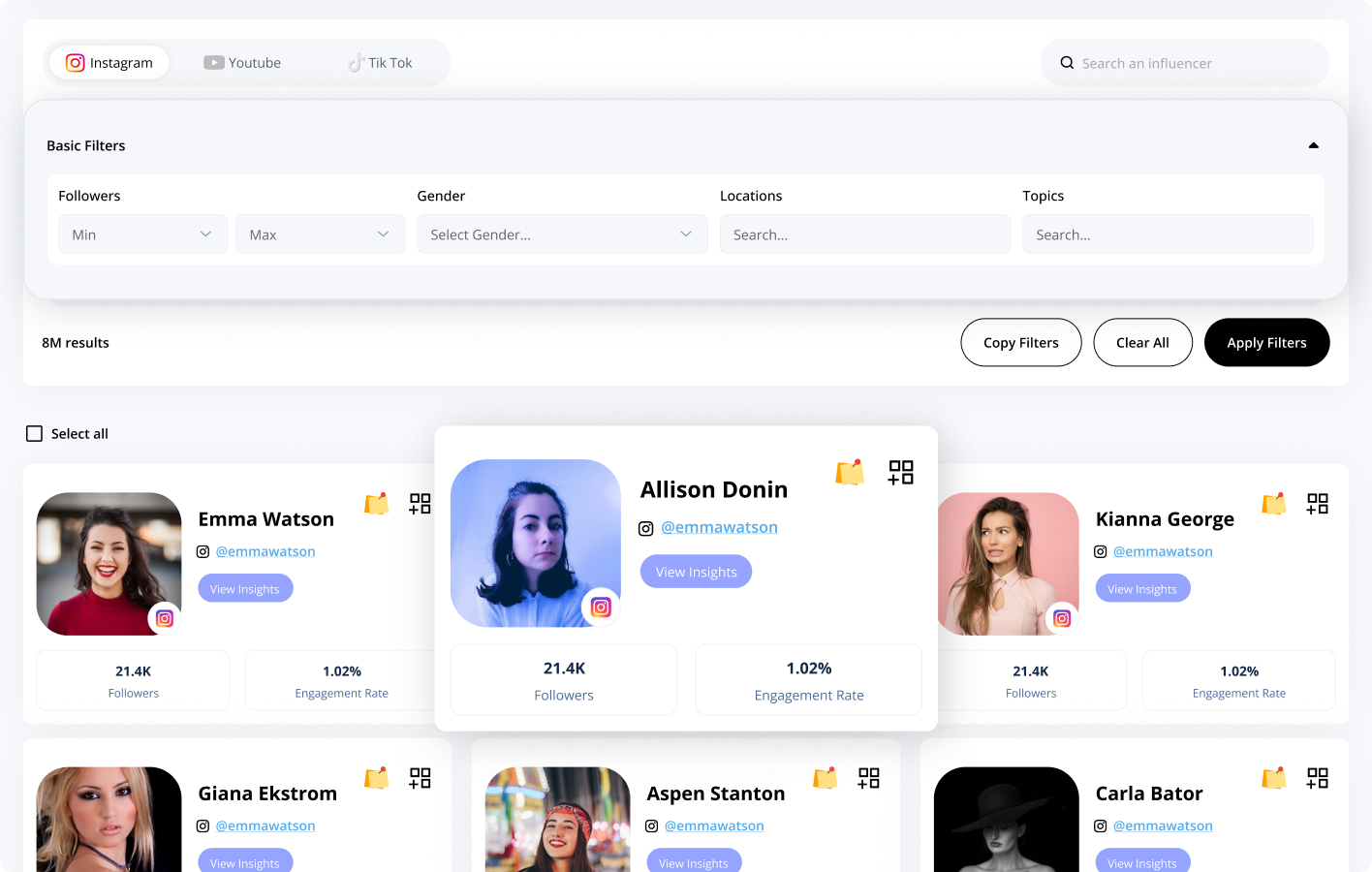
| Discovery database (filters) | Fast | Paid tool | Building a real shortlist at scale |
| AI content search | Fast | Paid tool | Finding creators by what they post |
| Creator marketplace | Fast | Transaction | Booking creators with set packages |
Manual search is fine for the first ten minutes so you learn the niche. After that it does not scale, and you have no way to see audience quality.
The faster route is a discovery database where you filter 380M+ creators by niche, audience demographics, engagement, and location, or even a keyword in their bio. You can search creators on Hive here for free.
If you already know the kind of content you want but not the creators, skip filters entirely and describe it in plain English. That is what AI influencer search is for, and we go deeper on it in AI influencer search: find creators by content.
And if you want creators with proof they take brand deals, look at who already tags brands like yours. More on that in find creators who already use your product.
Step 4: Vet before you pay (this is where budget is saved)
A creator can look perfect and still be a bad buy. Three checks catch almost every bad deal.
Check the engagement, not the follower count
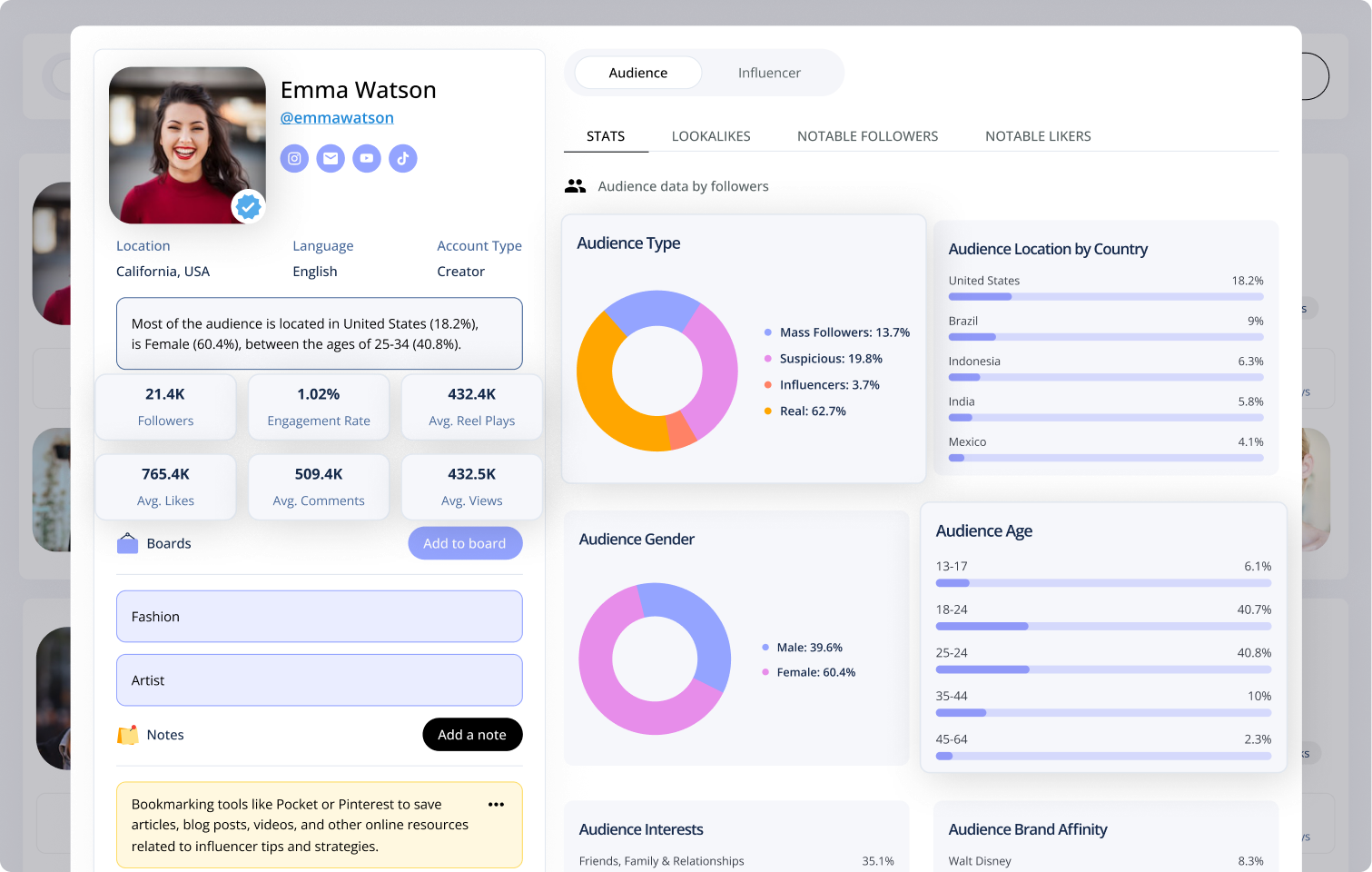
Followers are a vanity number. Engagement rate (likes plus comments relative to followers) tells you whether anyone is actually paying attention. As a rough guide, real engagement drops as accounts get bigger: a good micro creator might sit at 3% to 6%, while a 1M+ account at 1% can still be healthy. What matters is the number benchmarked against accounts of the same size. Run any handle through the free engagement rate calculator before you talk price.
Check for fake followers
Bought followers are still everywhere in 2026, and they are invisible until you look. A creator with 200K followers and 400 fake-looking likes is not a creator, it is a liability. The fake follower checker shows you the split of genuine versus bot accounts in seconds. If more than a quarter of an audience looks fake, walk away. We cover the full method in how to spot fake followers before you pay.
Check brand fit
Read the last 20 posts. Does the creator’s audience overlap with your buyer? Have they promoted a direct competitor last week? Does their tone match yours? This is a five-minute read that saves a five-figure mistake.
Step 5: Work out what it should cost
Once a creator passes vetting, price it before you negotiate so you are not anchored by their first number. Rates vary by platform, format, engagement, niche, and usage rights, but you can get a real per-post estimate for any creator with the rate card generator. For the full breakdown by follower size and platform, read how much do influencers cost.
One rule: never pay macro-creator rates for macro-creator reach if your goal is conversion. Smaller, trusted creators usually return more per pound spent. That trade-off is the whole subject of micro vs macro influencers.
Step 6: Reach out like a human
Your outreach is competing with a dozen other brands in the same inbox. Keep it short, specific, and respectful of their work.
- Name the exact post or video you liked, so they know you actually looked.
- State the deliverable, the timeline, and that there is a budget. “We’d love to collaborate” with no number gets deleted.
- Make it easy to say yes: one clear ask, not a five-part questionnaire.
A creator marketplace removes most of this friction because the packages and prices are already listed, and you book directly. We cover that shift in how brands book creators directly.
Step 7: Measure so the next round is smarter
Set up tracking before the content goes live, not after. Give each creator a unique discount code or tracked link so you can tell exactly what they drove. If you only measure likes, you will never know which creators to rebook. The full framework is in influencer marketing ROI.
The short version
Decide the goal. Pick one platform. Build a shortlist with a discovery tool or AI search instead of guessing. Vet engagement, fake followers, and fit before you talk money. Price it properly. Reach out like a person. Track everything. Do that and influencer marketing stops being a gamble and starts being a channel.
Want to skip the manual grind? Hive lets you search 380M+ creators, check audience quality, and book them in one place. Create a free brand account and build your first shortlist today.
Find creators worth paying, in one place.
Search 380M+ creators by the content they actually post, then vet, book and pay in one platform.
Create a free account